Glossary

Search by letters

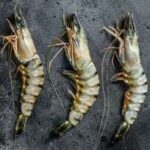
Black Tiger Shrimp / Giant Tiger Prawn (Penaeus monodon)

SHRIMP SPECIES

Description:

The Black Tiger Shrimp or Giant Tiger Prawn is one of the largest shrimp species and is highly valued in the market for its size and flavor. This shrimp, known for its distinctive black stripes on its shell, is native to the Indo-Pacific region but is now farmed in various parts of the world.

Aquaculture or Wild-Caught:

It is found in both wild-caught fisheries and aquaculture, although aquaculture production has increased significantly in recent decades, especially in countries like Thailand, India, and Bangladesh.

Characteristics:

  • This shrimp can reach impressive sizes, growing up to 36 cm in length and weighing up to 650 grams.
  • Its characteristic coloring with dark bands along the body makes it easily recognizable.
  • It is considered more robust and has a stronger flavor than other shrimp species.

Commercial Importance:

The Black Tiger Shrimp is one of the most valuable species in the international seafood trade, especially in premium markets that seek large shrimp. However, its production has declined in some areas due to its higher susceptibility to diseases compared to other species like Litopenaeus vannamei.

Geographic Distribution:

Native to the Indo-Pacific, from East Africa to Southeast Asia, this shrimp is widely farmed in Asia and Australia. Its presence in wild-caught fisheries is concentrated in the Indo-Pacific region.

Name Differences:

The name “Black Tiger Shrimp” is more common in American markets, while “Giant Tiger Prawn” is used in regions that follow British English or in parts of Asia and Australia. Both names refer to the same species (Penaeus monodon). Like vannamei, Penaeus monodon was initially classified under Penaeus, but this name has remained more stable and has not changed in modern scientific usage.

Distinctive Characteristics:

  • It is the largest shrimp species in the trade and one of the most prized for its size and intense flavor.
  • Unlike Litopenaeus vannamei, which is more resilient, Penaeus monodon is more prone to diseases in aquaculture, leading to a decline in production in some regions.
  • Although it is less common in aquaculture than vannamei, it is considered a premium product in many markets due to its size.


Subscribe to Vannamei Tips

Are you in the Vannamei Business?

We are always looking for new partners. If you are looking for or selling products, please contact us!